
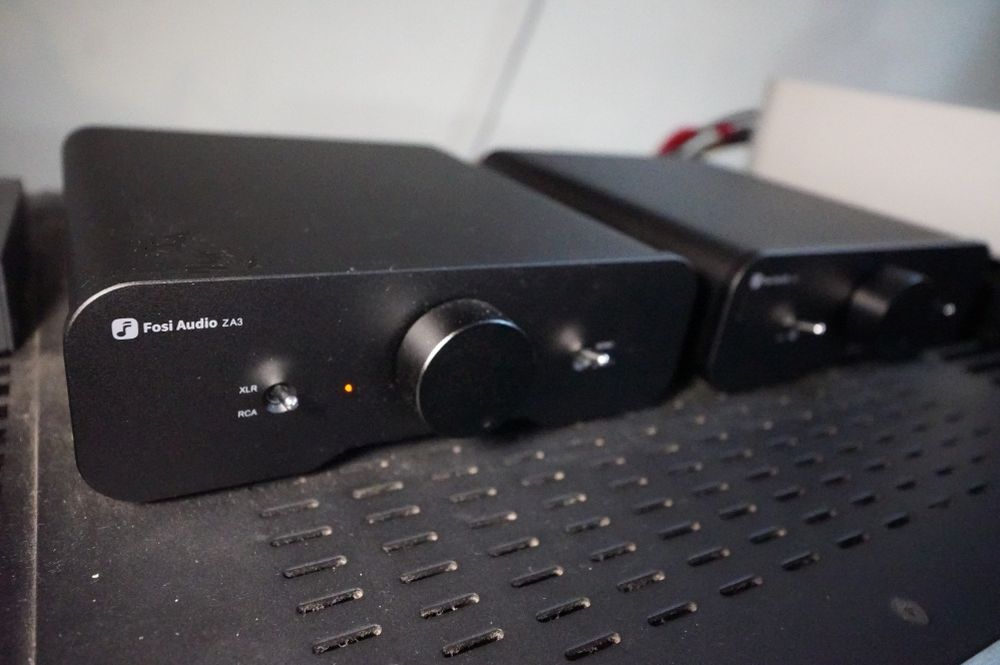
It is my view that Chi-Fi will dominate — if it is not already dominating — the affordable end of the hi-fi market. Companies like Wiim and Fosi are showing that they can take on more expensive components at much lower cost.
The Fosi ZA3 Balanced Stereo amp is a good example of how a really affordable amplifier can outperform components costing many times more.
I have been using Fosi V3 monoblocks for quite some time and I must say that the Fosi ZA3 in mono mode sound better than the V3 monoblocks. The Fosi V3 has a darker tonal balance (with its stock op amp) while the ZA3 brightens things up without sounding shrill and hard. I feel that the ZA3 is better at rendering the timbres of horns, acoustic piano (especially the high notes) and electric guitars.
The ZA3 is Fosi’s first amplifier that can be played in stereo or mono mode. It is a small Class D amp using a Texas Instrument TPA 3255 chip and allows op-amp rolling; compatible op-amps include DIP8 dual op-amps such as Sparkos SS3602, MUSES02, OPA2134PA, OP249, AD827, RM4558, LM4562, LME49720HA. The ZA3 came with a 48V power supply.
Fosi boasts of using high-grade components such as premium Japanese NCC, ELNA, and German WIMA capacitors, and Japanese Sumida inductors to achieve SINAD rating of up to 89dB, an SNR of up to 106dB, and a low noise floor of only 150µV. Power output is rated at 180W per channel (stereo) into 4 Ohms and 235W into 4 Ohms in mono mode.
Fosi ZA3 in stereo mode
First I tried the Fosi ZA3 in stereo mode by using a WiiM Ultra streamer/DAC connected by a Van den Hul co-axial cable to a Fiio K9 Pro ESS DAC/headphone amp/preamp connected to the Fosi ZA3 with a pair of WyWires Platinum interconnects. This would seem like a mismatch as the cables cost more than the components, but it was done to extract the best from Chi-Fi. Most audiophiles would have a few pairs of interconnects kept in the storage box anyway. The speakers were the ATC SCM50 floorstanders and speaker cables were Kimber 12TC.
After listening to a few songs it was obvious that the tonal balance was brighter than the V3. In comparison, the V3 sounded dark and laid-back. The ZA3 not only sounded brighter, but also more detailed and forward. Though it did not have the Post-Filter Feedback Technology of the V3, its bass control did not seem affected. I also noticed that it sounded more dynamic and the dynamic swings seemed faster too.
Fosi ZA3 in balanced mode
To set balanced mode, you need to do just one thing — switch input from ‘RCA’ to ‘XLR’. I used a pair of Oyaide QAC 212-R XLR interconnects.
The sound quality improved — the soundstage was larger and images better defined. If you use only one Fosi ZA3, use balanced mode for better sound quality.
Fosi ZA3 in mono mode
Flick the switch from ‘Stereo’ to ‘Mono’ and make sure all cables in the back are connected to the left channel.
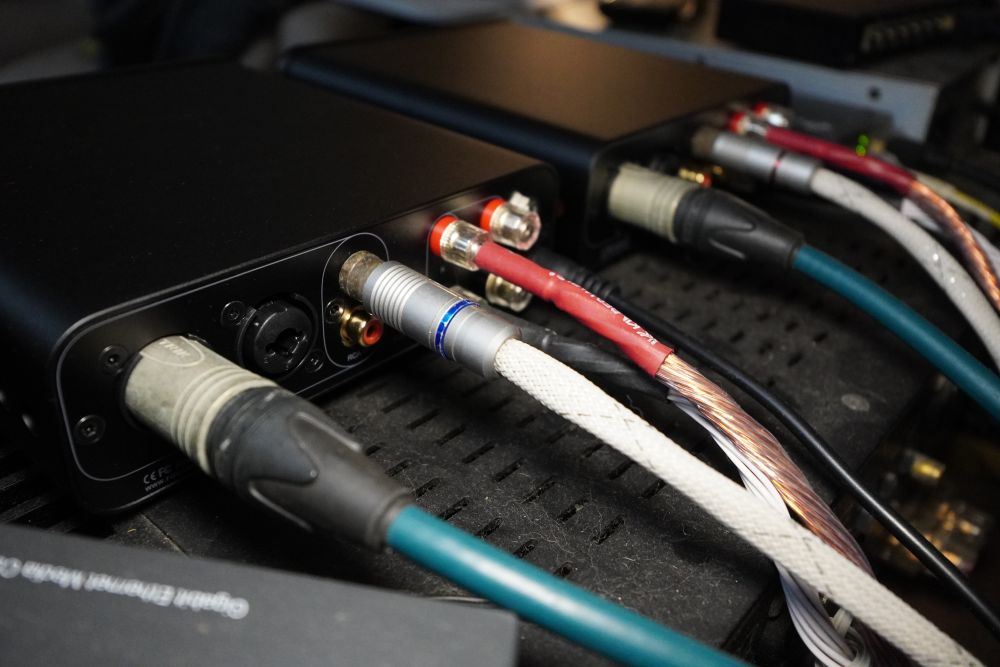
In mono mode with XLR interconnects, the Fosi ZA3 really punched above their weight and the sound quality improved by a large margin. Two ZA3s cost slightly more than a pair of V3 monoblocks, and after listening to both models, I would readily recommend a pair of ZA3s in mono mode using XLR interconnects.
They sound as good as, if not better, than even Class AB amplifiers costing many times their price.
The Fosi ZA3 is available at Stars Picker at RM614.96 each. Click https://starspickeraudio.net/products/fosi-audio-za3-balanced-stereo-amplifier-home-audio-2ch-mono-amp-with-tpa3255-chip?_pos=36&_sid=05ed5040b&_ss=r&variant=45113007669445
